Unknown's avatar

About David Sweet

David is in his fifth career and currently an Adjunct Researcher at the University of South Australia. Now with his PhD completed David is expanding his academic interests in research, specifically involving oral history, family photography and the family narratives. David is co-founder of the Oral History Hub (ohh...) at the university www.unisa.edu.au/ohh Since January 2015, David, has been the national secretary to Oral History Australia. He is a Fellow of the Public Relations, Institute of Australia, and a Justice of the Peace in South Australia.

The nostalgia of cemeteries

There are a number of self-guided interpretive walks around the cemetery.

There are a number of self-guided interpretive walks around the cemetery.

I’m making a big assumption here, but I suspect that most people do not visit a cemetery as a general, pleasurable activity.  When we do wander through the grounds it is often at times of sadness, there are the memories of bitter-sweet nostalgia, or to pay our respects to someone who is dead.  I recently visited the West Terrace Cemetery where more than 150,000 bodies are buried.  This was a walking tour and talk run by volunteers with the Adelaide Cemeteries Authority.

Besides the family vaults, grand obelisks and deteriorating head-stones there is a rich history to be discovered.  What is the history behind an urn on a grave, the myths of pointy tops to the monuments, the various renditions of a a marble scroll, or the Celtic cross?  At the West Terrace Cemetery four WW 1 AIF soldiers awarded the Victoria Crass are buried there.  As you wander the rows, names from our colonial past bruise our school-time memories of history lessons, F.H. Faulding, Carl Linger, composer of The Song of Australia, or the Menz family plot are just a few.  The AIF section is Australia’s first dedicated military cemetery.  Percy Aldridge Grainger (1882-1909) was an internationally renowned musician and composer.  He apparently rated himself the fifth best composer in the world.  He was also a tad eccentric as well.  He would make his own clothing – suits, and waist coats – from terry toweling, and in his will he stipulated that the flesh be stripped from his body and his skeleton be exhibited at the Grainger Museum in Melbourne.  The executors respectfully declined to carry out this wish.

City of Singapore – ship fire, heroes, destruction and death
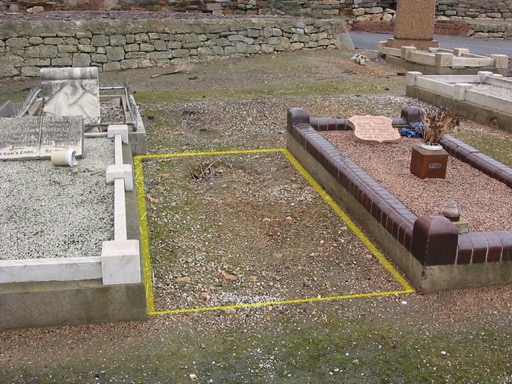
The burial site of firefighter Albert Greenman at the West Terrace Cemetery.

The burial site of firefighter Albert Greenman at the West Terrace Cemetery. The burial site of firefighter Albert Greenman at the West Terrace Cemetery. Photo courtesy of Trevor Pert, volunteer, Adelaide Cemeteries Authority (2015).

Having been a firefighter for thirteen years, I have a strong interest in commemorating and remembering those who died in the line of duty.  There is a grave in the WTC where one of three firefighters who died fighting the City of Singapore ship fire at Port Adelaide, rests.  He was Albert Greenman.

According to Fire Brigade history, from the publication Muscle and Pluck Forever, by Page and Bryant, 1983,  the City of Singapore ship-fire was on the 26th April 1924.  Quoting from page 320 of the publication:

Another body had been taken to the Casualty Hospital: that of Albert Greenman.  But when Dr Percival Cherry examined Greenman he saw there was nothing to be done.  … [He wrote at the police station] ‘This is to certify that I made an inspection of the body of Albert Greenman on a stretcher at the Port Adelaide Hospital last night at approximately 11.20 pm.  The body was dead on admission.  The skull was extensively fractured, the right half of the vault being almost entirely absent.  The brain was also absent.  The death in my opinion was instantaneous.’

According to the State Library website at Fire Brigades Headquarters in Adelaide a bronze plaque was placed commemorating the bravery of the firemen who died: GJA Anderson, James Hickey and Albert Greenman. This plaque was subsequently relocated to the foyer of the new headquarters building of the South Australian Metropolitan Fire Service in Wakefield Street.

Two of those who died in this horrendous fire, George Anderson and Jim Hickey, are commemorated by a beautiful white marble statue of a firefighter at the Cheltenham cemetery.   Local fire fighters from Woodville, Rosewater and Port Adelaide fire stations in the late 1970s restored this site and is still kept neat and tidy.

Albert Greenman’s grave has no headstone or plaque.  It is only ‘known’ through the records at the cemetery.  Why this is so I have no idea, I can only speculate.  However, it is something I want to correct.  More will come in my blogs on this intriguing and interesting page from our State’s history.

Queen Adelaide – The story of Adelaide

The Dowager Queen Adelaide, shortly before her death in December 1849.  (from The story of Adelaide p.25)

The Dowager Queen Adelaide, shortly before her death in December 1849. (from The story of Adelaide p.25)

Did you know:

Queen Adelaide was born on August 13, 1792 in Meiningen, in Germany.  She married Prince William Henry, Duke of Clarence, the third son of King George III when he was 53 and she was 25.  It was an arranged marriage, which took place in Kew Palace, London in 1818.  Prince William had ten illegitimate children before his marriage.  Princess Adelaide (as she became known), opened up her home and her heart to these children and cared for them as if they were her own.  Adelaide was instrumental in having the British Parliament enact laws to ensure that all children should be taught to read and write.  After the death of King William, Adelaide continued her charity work, donating money, mainly to assist disadvantaged children.  Adelaide died on December 2, 1849, aged 57 years and was deeply mourned by the English people.

The Queen Adelaide Society Inc. was formed in Adelaide by the late Dorothy Howie in 1981, mainly to promote our heritage ad knowledge of Queen Adelaide, te consort of King William IV of England.

When King William’s permission was sought to name the capital of the new colony of South Australia after him, he suggested rather that it be named Adelaide, after his Queen.

Throughout her life Queen Adelaide loved children and worked for better living conditions for the poor ad better education for all children.

The Queen Adelaide Society members work on a voluntary basis in her honour, supporting needy children’s charities in South Australia.  The committee organises fundraising activities and welcome the public’s support.  A donation from these activities goes to a chosen children’s charity each year.

This information was adapted from the publication; The Story of Adelaide and the Queen Adelaide Society Inc. informations sheet.  Further information about the activities of the Society and Queen Adelaide can be obtained from the Society’s web site.

History is all around us – we just have to open our eyes

Queen Adelaide (from the publication: The story of Adelaide)

Queen Adelaide
(from the publication: The story of Adelaide)

It is four weeks since I last posted anything on my blog.  It is not because I haven’t done anything interesting, but I like to keep my posts different to the mundane activities of daily life.  My PhD writing is in the final stages – I know I keep saying that – with my new supervisor reading the thesis for the first time.  While there are suggestions and recommendations to ‘tighten up’ some of the language and add a few more references in a few places, overall he seems satisfied.  I’m treating his review as the independent examination before it goes out to the two official independent examiners – one in Australia and one overseas.

I have a couple of other projects running concurrently as well – in addition to teaching one undergraduate class (of 30 students) and stepping in for a Graduate Diploma subject whilst a colleague is overseas.  A few weeks ago I commenced the oral history research of my mother-in-law, Vida Liebelt.  The project is titled: Vida – a pastor’s wife.  So far there have been ten interviews and about eleven hours or recorded material.  Approximately six hours have been transcribed and I’m gradually undertaking the painstakingly detailed challenge of checking and correcting the transcripts against the voice.  I expect that there will be another two interviews, but I will conduct them once I have all the transcripts up to date and I can look for any gaps in the narrative.  More of this will evolve over the coming weeks and months.

About five weeks back I wrote a piece titled: Where are they now?  It was about discovering a 1965 order of service and dinner menue for 92 Queen’s Scout recipients – of whom I was one.  The research is slowly progressing.  I have met with two other Queen’s Scouts from that year and later this week I will be having lunch with one of the official party from the dinner.  While I am still unsure whether this will develop into a project or not, I’m certainly enjoying meeting with some of my fellow recipients.  There will be further updates on this as well.

During the week I heard a presentation from the Queen Adelaide Society Inc. and then on Friday (last) I visited the West Terrace Cemetary.  Both were interesting and offered some  opportunities for research community involvement as well.

Dawn Service – 2015

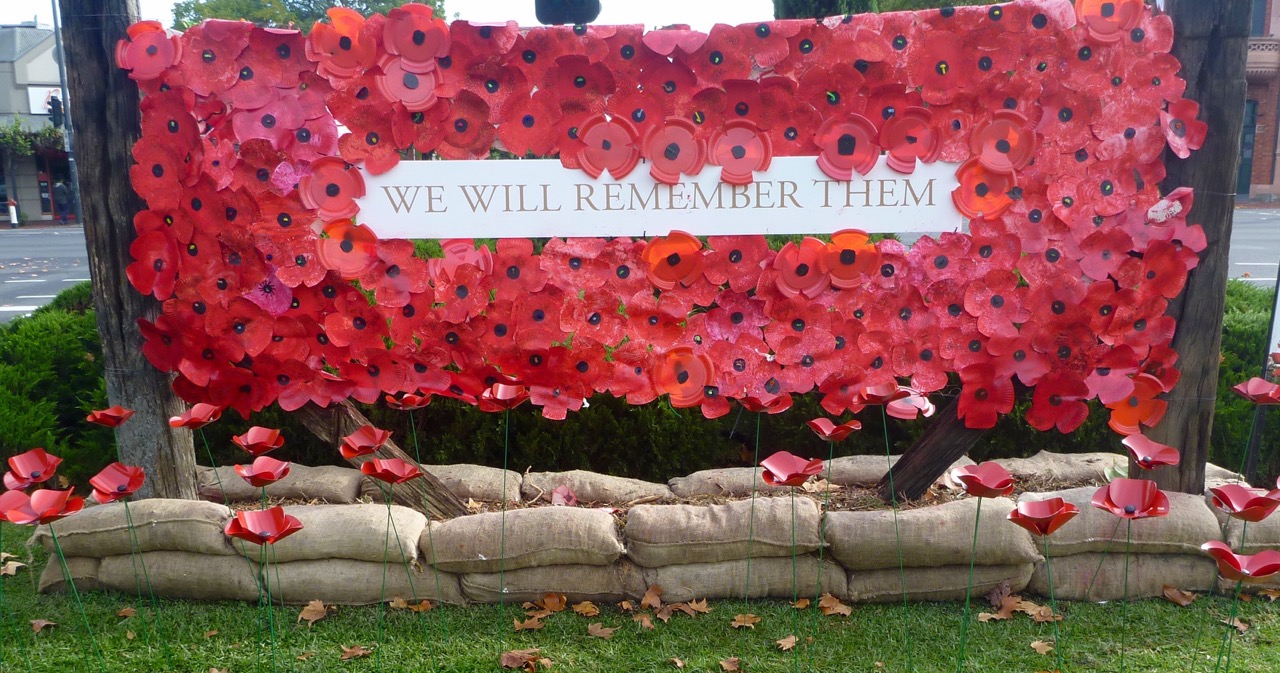
Poppies on display

Poppies on display

Eighteen months ago I presented a paper on my family’s 100 years of connection to war, 1913-2013.  This morning I commemorated the 100 year remembrance of the first landing at Gallipoli, by attending the Dawn Service at the Norwood Cenotaph.

When I was a child, I attended similar services with my father, here at Norwood and also in the city at the State War Memorial.  In the soft darkness before dawn it was quiet cold, but the atmosphere was quiet, respectful and there were more than 600 people there.  The youngest I saw was a babe in arms, but so many young children and teenagers attended, supporting those older men and women who had obviously served our country.  The hour-long service included some beautiful singing from students at the local Marryatville Primary School.

P1010864

Dr Leanne Glenny and David Sweet

P1010865

The Cenotaph at Norwood with memorial wreaths

P1010868

A display of poppies created by a local primary school

Afterwards we met up with colleague Dr Leanne Glenny and her husband Roger, who both served in the Australian (Leanne) and New Zealand (Roger) Defense Services. A typical Anzac Day breakfast of eggs, bacon and toast, with coffee, afterwards, was most welcome.

Back home I watched the Tv coverage Anzac Day march through Adelaide and was pleased to see some ‘mates’ who served in Vietnam and other areas of conflict marching.  Then I was moved by the ceremony televised from Anzac Cove.  Politics aside, the speeches were appropriate, respectful and recognised all sides in this bloody conflict.

While today we remembered those who were, and remain, our Anzacs over the next three years similar centenary events will take place to honour those who were in France on the Western Front.

Lest we forget.

Where are they now?

I posted an extract of this on the Adelaide Remember When FB page earlier today. Fifty years ago this month (April 1965) 92 teenage boys were presented the Queen’s Scout award by the then Governor Sir Edric Bastyan.  On April 3 (1965) the Queen’s Scout dinner was held at the Top of the Town Restaurant, in Cox Foys, Rundle Street, Adelaide. Back in the ’60s Adelaide did not have many restaurants, especially ones that could cater for a hundred or more guests.  Also the liquor licensing laws were significantly different to those of today (2015), and the legal drinking age was still 21 years of age – so that excluded a hotel venue. In fifty years my detailed memory of the evening has dimmed somewhat.  However, I recall being a little over-whelmed by the occasion – I was 17.  My father had driven me into the city as the event was seen as a significant ocassion by my family.  I caught the bus home afterwards.  The Chief Commissioner (for Scouts) was Henry Rymill, CBE. The 1965 Queen's Scout presentation dinner menu The program for the evening’s events included the Loyal Toast List to Her Majesty The Queen, and a toast to the 1965 Queen’s Scouts.  The response to the Queen’s Scouts Toast was given by Peter Balan, who has since become a successful academic at UniSA.  I remember the film called: ‘The Senior Way’ being screened, but I have no recollection of what it contained other than it showed many images of Scouts doing scouting ‘stuff’. The Queen’s Scout Award is an achievement from my teenage years of which I am still proud and pleased to to include in my resume.  However, what has happened to the other 90 eager young boys – the stories of their lives, their children and grand children?

Presentation of Queen's Scout Award to David Sweet, Government House, Adelaide by the then Governor, Sir Edric Bastyan. (April 1965)

Presentation of Queen’s Scout Award to David Sweet, Government House, Adelaide by the then Governor, Sir Edric Bastyan. (April 1965)

Howard Hamon is the brother-in-law of my mate’s sister (a small world) David Jansen and I went to Glen Osmond Primary School together, but I lost touch with him many years ago, David Rattray (if he is the same person) and I were at Unley High and a number of other names from the ‘Menu’ may have been police officers. Is your name or the name of someone you know on the back of the menu (above)?  Maybe through my blog and Adelaide Remember When. the question can be answered.?

Look in the mirror

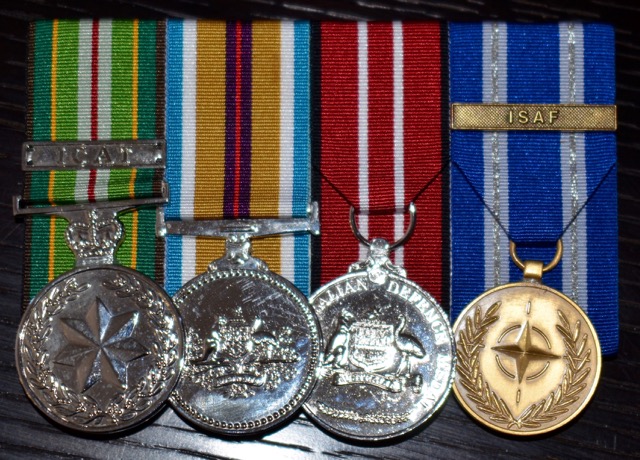
Service MedalsI normally refrain from commenting on newspaper reports or ill informed rants on social media.  So often the Australian media is opinion and not reporting, and social media, well that seems to cater for 150 characters of typing and not much else.

Reported in mainstream media last night and today has been the claim that Woolworths either mistakenly or deliberately tried to make some commercial mileage out of the approaching centenary celebrations around our ANZAC tradition.  This has led to a flurry of social media comments.  What has annoyed me more than Woolies making a singularly bad corporate decision has been to number of people who have dismissed this incident as something nothing.  That disappoints me, so I have this to say.

To those who are claiming that this is a non-story, or not important please stand in front of the mirror and open your eyes.  You (and we in Australia) are enjoying your/our freedom and quality of living today, because of the sacrifices these men and women (and their families) have made over decades.  It is not glorifying war or conflict, it is about the safety and protection of a way of life we have come to expect.  No, I have not served in a theatre of war, but I certainly respect and honour those who have.   ANZAC is a time of reflection that must not be sullied by crass commercialism by Woolworths, any other business, or an individual.

Lest we forget.

I wish I had the photograph

P1000500

Just over 95 years ago [March 23, 1920] Kingsford-Smith, later to become Sir Charles Kingsford-Smith landed his Vickers Vimy (a World War 1 bomber bi-plane) at the culmination of the first plane flight from England to Australia at the Northfield aerodrome on the outskirts of Adelaide.  It is now an inner suburb.

As a young boy, during our car trips through this area, my father would often tell, and retell, the story of his moment of being part of this historic event. Now lost over time, there had been a photograph of my father as an eighteen-year old taken on that March day in 1920. P1000498  My father [eighteen at the time] had walked and hitched rides from his mother’s home at Parkside to watch the Vickers Vimy land at Northfield.

The press of the crowd, reported to be in the thousands, was too great for him to catch any more than a glimpse of the Australian heroes, but he was there.  He saw the plane and his stories made that historic moment mine as well.  Dad had a photograph of his moment, amongst the crowd, at the landing.

From the old photograph that was buried in the bottom drawer of the sideboard in our dining room at home, I can remember my father in his suit and tie, white shirt, and bowler hat, jauntily smiling at the camera. Why is this important to me, and today?

Wearing my father's 'restored'  bowler hat.

Wearing my father’s ‘restored’ bowler hat.

The old, black, bowler hat had been one of the heirlooms that somehow has been in my possession for thirty or more years.  Over time it had been severely damaged and I had often contemplated tossing it out.  However, I kept it.  Today I collected this special piece of history from ‘Adelaide Hatters’ in the Adelaide Arcade, where it had been beautifully restored.

I have my father’s bowler hat, but I wish I still had the photograph.

Inspiration comes from …

DAS_2416

It has been a while since I posted, not because I haven’t had anything to write about, just that other priorities were important.  However, that is life.

During the past three weeks I have listened to twenty-nine final year students present on what, or who has inspired them and guided their passion to strive for a career and life after university.  They, in turn, have inspired me.  Most spoke of publicly successful business women and men, prominent sports people, authors and community leaders.  However, three were different – thus inspiring in a unique way.

Two students spoke of their father and how their examples of support, commitment and love continues to inspire them.  The third student could not relate to any person who had inspired her.  With an initial glance at the assignment, she considered that it was a ‘fluffy’ assessment and that she would not have to do much work to get a good mark.  That was until she actually though about the question as to whom inspired her.  She then discovered that it was not so easy.  Still she could have taken the easy option and picked some ‘high flyer’, conducted a little research and lied her way through her presentation.  However, she didn’t.  The value of ethical behaviour kicked in.  She talked of her challenges in understanding what inspiration was, what drives her to get up each morning, where she wants to go with her working life and what she wishes to contribute to the community.  She found the person who is passionate and inspirational – herself.

Oral History Australia – national secretary

It is always interesting where your life choices take you.  When I commenced my ‘academic career’ I was dedicated to teaching communications, public relations and media.  While I still have an avid interest in this area of business and my teaching remains in communications, my research interests are now focused on social history, cultural studies, ethnography and oral history.

From today I taken on the role of the (Hon) secretary of the national body, Oral History Australia.  Anne Johnson, the retiring secretary has not only done a fantastic job over the past couple of years, she has been exceedingly well organised in providing the perfect hand-over.  I have big shoes to fill.

If you have an interest in oral history, or want to learn more about this fascinating means of capturing people’s past, check out the orgainsation’s web site here.  There are also links to the various State bodies and local contact details.

I’m struggling with nostalgia

Class Photo, Glen Osmond Primary School 1955

Class Photo, Glen Osmond Primary School 1955

Nostalgia is a word that is commonly used to describe those enjoyable moments in our respective pasts.  We may recall times of riding push-bikes or playing marbles in the gravel on the way home from school.  Or for the girls it may be those special dress-up events when they became little pink princesses, or created elaborate afternoon teas.  No I am not being politically incorrect or sexist, that is just the way we played as kids.

So why are Baby Boomers nostalgic for that past, the ‘other’, which is so different to the experiences of today?   Often the call is made: “It so nostalgic to remember those good old days“.

The defining and understanding of the term nostalgia has changed over more than two centuries of use. Its genesis comes from the Greek nostos, which means a return to your home and algia, meaning a hurtful or agonising ailment.  According to Davis (1979, p. 1), nostalgia was a medical condition described by Swiss physician Johannes Hofner, in the eighteen hundreds, as a disease showing signs of melancholy through to suicide.  It was caused by extended absences from a person’s home.

However, over prolonged time its medical determination transformed in to a popular understanding of nostalgia being a sentimental yearning for a past that is gone and cannot be relived.  Yet there is this desire by many to remember previous times with a degree of longing and angst of loss (Pickering & Keightley 2006, p. 920). Their discussion emphasises that this ache for nostalgia should not be censured, but embraced to show ‘how the past may actively engage with the present and future’ (2006, p. 920).  Nevertheless, a blanket acceptance of the comforting cocoon of nostalgia does not assume that this ‘past’ is analytically assessed (Hutcheon 1993, p. 245).

In recounting war-time activities with New Zealand soldiers, Hutching maintained that nostalgia is ‘about their activities as young men’ (2011, p. 237).  In a personal observation Australian sportsman, author and journalist Peter FitzSimons (2010, p. ix) views nostalgia as: “through my own experience and that of my family, the simplicity of a time long gone in Australia’s past” is realised.  It should not convey sadness or a sense of loss, but needs to offer the magic opportunity to recapture those former and glorious moments (Holak & Havlena 1998, p. 223).

Yet is unrealistic just to evoke, or call on the ‘good times’ and feelings of nostalgia.  We cannot bring bygone days to life, and as commented upon by Holak and Havlena (p. 222) this promotes the feeling of sadness and loss, because there is no return to the past.  The memory of the “good old days” sets up the conflicting emotions of desire and melancholy. A longing for the past is not necessarily about recalling essential details as it is claimed that “one can be nostalgic for something one never experienced” (Green-Lewis 2000, p. 66).

Nostalgia is a ‘coping mechanism’, helping to support our identity and provide an avenue for forgetting (Mannik 2011, p. 87).  It is in our individual memories however they are created, that we recall the myths, emotions, memories and richness of nostalgia.

This outlines why I am struggling with nostalgia.  I see it as encompassing both the good and the bad from my past, the happy and sad times and those exciting memories and times of embarrassment.

Still the question remains, what actually is nostalgia?  Above I recounted its medical basis and historically it has been described as a cerebral disease and a serious psychiatric condition (Routledge et al. 2011).  Marketers and advertisers have ‘tapped into’ this nostalgic concept more recently as it can shape consumer preferences (Holbrook 1993, p. 255; Holbrook & Schindler 1996, p. 36; Stern 1992).  Those interested in cultural studies and sociology consider that nostalgia is more than a return to our home; it is the desire to experience the past once again, or to languish in sentiment and the status quo? While the definitions vary somewhat the understanding is similar.  The perfection of the past or the future is seen against accepting and embracing the present (Wilson 1997, p. 132). Wilson (1997, p. 138) concludes with the observation that:

Perhaps the real secret pleasure of nostalgia is … experiencing the reality of change, the passage of time, and the existence of that great hinterland of ‘lost time’ that yet somehow is still within us.

She seems to be claiming that while we embrace change we yearn for the past, a paradoxical position. It is argued that nostalgia is searching in the past while concurrently it is a starting point as a guide into the future (Pickering & Keightley 2006, p. 921).   I prefer to see nostalgia in a similar manner to that of Routledge et al. and it is more than just a positive memory (2012, pp. 458-459):

It is the self-focused emotional process through which people recollect experiences that imbue their lives with meaning.

There are many facets from which to reflect upon nostalgia.

However, my emphasis and understanding is on the comfortable acceptance of it being memories, cloaked in a warm fondness that can be experienced now and conveyed into the future. To this point I again draw on Wilson and her acquiescence of the ambivalent nature of nostalgia and it embracing both the past and the future (1997, p. 139).

So do you understand nostalgia?

PS.  Can you find me in the photograph above?  I’m in the back row, third from the left.